Canistel
Canistel Fruit Trees
The canistel is sometimes erroneously recorded as native to northern South America where related, somewhat similar species are indigenous. Apparently, it occurs wild only in southern Mexico (including Yucatan), Belize, Guatemala and El Salvador. It is cultivated in these countries and in Costa Rica (where it has never been found wild), Nicaragua and Panama, Puerto Rico, Jamaica, Cuba, the Bahamas, Southern Florida and the Florida Keys.
The canistel is tolerant of a diversity of soils–calcareous, lateritic, acid-sandy, heavy clay. It makes best vegetative growth in deep, fertile, well-drained soil but is said to be more fruitful on shallow soil. It can be cultivated on soil considered too thin and poor for most other fruit trees.
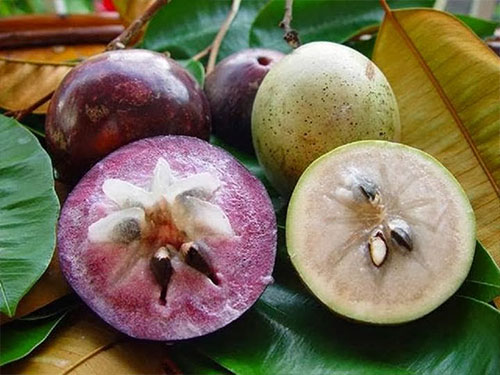
The fruits generally mature from November or December to February or March in Florida.
Some Floridians enjoy the fruit with salt, pepper and lime or lemon juice or mayonnaise, either fresh or after light baking. The pureed flesh may be used in custards or added to ice cream mix just before freezing. A rich milkshake, or “eggfruit nog”, is made by combining ripe canistel pulp, milk, sugar, vanilla, nutmeg or other seasoning in an electric blender.